
Novent - Digital Lean Production System
Lean Glossary

Kanban

Kanban = 看板 (KAHN-bahn)

Kanban is the signal that turns a factory from push to pull. Instead of producing based on forecasts, teams produce only what the next process actually needs, using a card, a bin, or a digital signal to trigger the work.

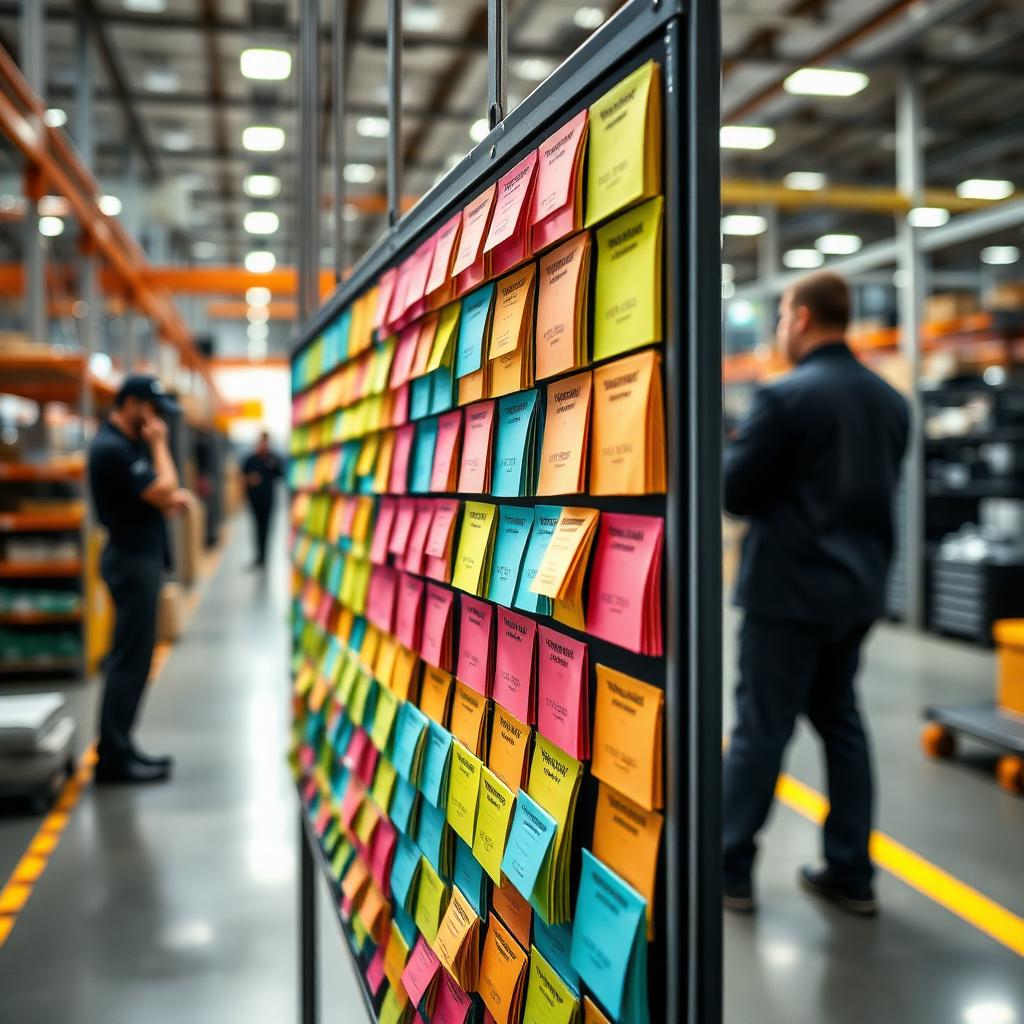
Physical Kanban board with colored cards on the shop floor

What it is

Kanban (看板) means "signboard" in Japanese. At its simplest it is a card that authorizes a specific quantity of a specific part to be produced or moved. Every part in inventory has a Kanban attached; when the part is consumed, the card returns upstream as a signal to replenish exactly that amount.

Why pull beats push

Push systems produce to forecast and hope the demand is real. When it isn't, you get overproduction, the worst of the eight wastes because it hides all the others. Kanban limits work-in-progress by design. If there is no Kanban, no work happens. Inventory shrinks, lead times drop, and problems become visible fast because the buffer that used to hide them is gone.

How to design a Kanban loop

Start with actual demand at the consuming process. Calculate how much inventory covers replenishment lead time plus a safety buffer. Size the Kanban to that quantity. Rules: no production without a card, one card per container, and cards move upstream in strict FIFO order. Boards, bins and electronic signals all work, the discipline matters more than the format.

Common pitfalls

Treating Kanban as "agile sticky notes" and forgetting the pull rule. Sizing lots for convenience rather than actual takt. Producing ahead "just in case." Every one of these turns Kanban back into push and quietly reintroduces overproduction.